Solving the 3PL Dilemma: Navigating Post-Pandemic Growth Under the Dual Pressure of Space and Labor
As supply chain complexities continue to multiply, third-party logistics (3PL) providers find themselves at a critical crossroads. A recent feature in Forbes highlighted a paradox that defines the post-pandemic logistics landscape: while the surge in digital commerce has unlocked massive business development opportunities, ever-increasing disruptions in supply chain optimizations have turned day-to-day execution into a high-stakes challenge.
Today, 3PLs are caught in a classic double-bind. Physical warehouse expansion is incredibly hard to achieve, and qualified labor is harder to secure than ever before. To survive and grow, logistics leaders must pivot away from outdated playbooks and embrace solutions that address both bottlenecks simultaneously.
The Real Estate Bottleneck: Why Expansion is Off the Table
For decades, the standard response to rising throughput demands was simple: lease more square footage or build a new facility. Today, that strategy is highly problematic.
With industrial real estate costs skyrocketing and vacancy rates remaining tight, physical expansion (scaling "out") is often financially unviable. Even when capital is readily available, constructing new distribution centers takes months or years—time that fast-moving consumer markets simply do not afford.
This spatial constraint means that 3PLs must find ways to squeeze more efficiency out of what they already have. The only logical path forward is to optimize vertical space, narrowing aisles and stacking higher to reclaim underutilized capacity within their existing footprints.
The Human Factor: The Persistent Qualified Labor Drought
Compounding the space crisis is a severe, systemic labor shortage. Across the globe, warehouse managers consistently report that finding, training, and retaining qualified forklift operators and material handlers is a constant battle.
The consequences of this talent drought are felt daily:
- Volatile Operational Costs: Relying heavily on temporary agency staff or paying excessive overtime to meet tight deadlines eats directly into a 3PL’s already razor-thin margins.
- Safety and Quality Risks: High turnover rates often mean less-experienced personnel on the floor, increasing the risk of workplace accidents, rack damage, and picking errors.
- Inability to Scale: When seasonal demand peaks, a lack of boots on the ground prevents operations from scaling up to meet the surge, directly threatening customer retention.
The Autonomous Solution: Solving Space and Labor in One Leap
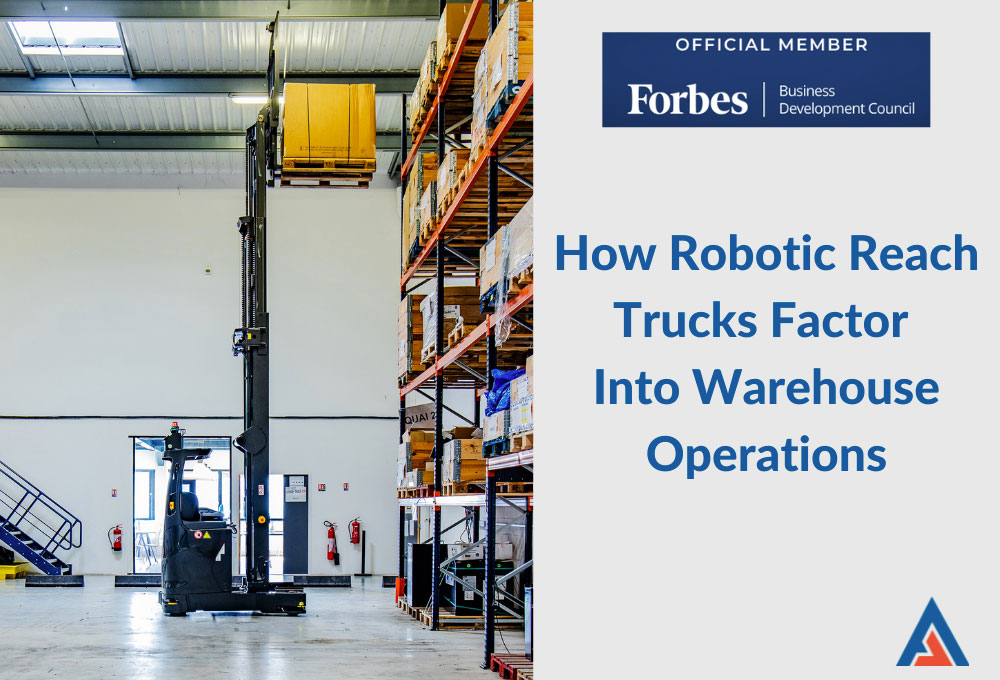
Faced with these compounding challenges, forward-thinking 3PLs are turning to infrastructure-free autonomous vehicles as the ultimate dual-purpose solution. High-reach autonomous forklifts and Very Narrow Aisle (VNA) robots represent a massive paradigm shift because they tackle the space and labor bottlenecks at the exact same time:
- Maximizing Existing Space (Scaling "Up"): Human operators struggle with safety and visibility when operating heavy machinery in cramped spaces or at extreme heights. Autonomous trucks equipped with 3D perception and LiDAR navigate tight aisles safely and stack pallets with millimeter-level accuracy. This allows 3PLs to significantly increase pallet density within their existing physical footprints.
- Insulating Operations Against Labor Shortages: By automating repetitive, long-distance pallet transportation, 3PLs can run a predictable, 24/7 operation with minimal human oversight. Crucially, this is not about replacing workers; it is about upskilling them. Existing warehouse staff can be redeployed to strategic, high-value tasks—such as inventory management, exception handling, and fleet supervision—improving worker safety and overall job satisfaction.
The post-pandemic era does not forgive operational stagnation. By transforming standard material handling into a highly intelligent, automated workflow, 3PLs can stop chasing temporary fixes and start building a resilient, future-proof logistics engine.