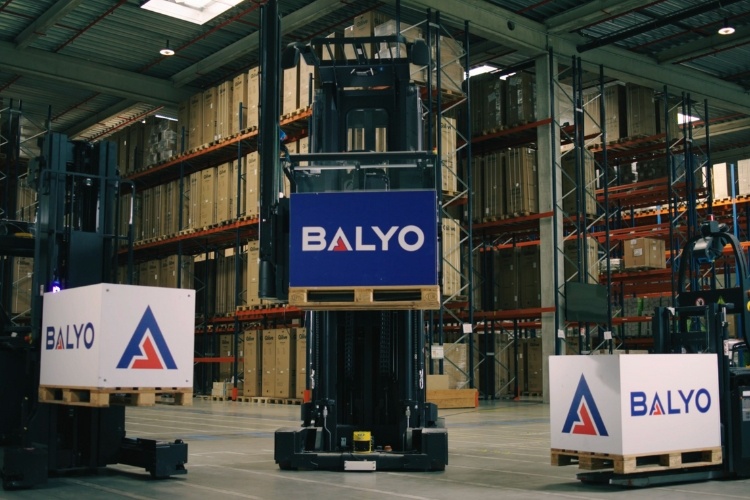

The Power of Partnership: How Collaboration Unlocks Seamless Warehouse Automation
In the race to achieve Logistics 4.0, many operations managers fall into a common trap: they view automation as a series of isolated hardware purchases. They buy a robotic reach truck from one vendor, a conveyor system from another, and a warehouse management system (WMS) from a third. The result is a fragmented, complex integration puzzle that drains time, money, and operational sanity.
The truth is that no single robotics vendor can solve every material handling challenge in isolation.
To deliver maximum efficiency and flexibility, the robotics industry is undergoing a massive cultural shift. Writing for Forbes, John Hayes, Director of Sales at BALYO, highlighted a game-changing perspective: the future of automation relies on strategic, open collaboration among solution providers.
Breaking the "Friend or Foe" Paradigm
For a long time, the industrial robotics sector was defined by fierce competition. Companies guarded their proprietary ecosystems, forcing customers to choose between rigid, single-brand ecosystems or painful custom integration projects.
Hayes argues that this outdated "us versus them" mindset is actively holding back businesses that want to automate.
"Nothing is so precious that working together should be off the table. This is not a 'friend or enemy' paradigm. It is a matter of meeting the demands of each and every customer."
By shifting the focus from protecting market share to solving the customer's actual pain points, leading robotic solution providers are now building collaborative networks. When different hardware, software, and infrastructure technologies speak the same language, the barrier to automation drops instantly.
Why Turnkey Solutions Require a Multi-Vendor Ecosystem
A complete material handling solution is never just about the robotic truck; it is about how that truck interacts with the environment around it. True flexibility is achieved when an autonomous vehicle can seamlessly communicate with:
- Physical Infrastructure: Syncing flawlessly with dynamic racking systems, high-speed automated doors, and fire alarms without requiring facility modifications.
- Fixed Automation: Interacting directly with conveyor belts, automatic shuttles, and palletizers to hand off loads without human intervention.
- Software Ecosystems: Integrating into active ERP and WMS databases so that missions are generated, tracked, and optimized in real-time.
- Other Robotic Fleets: Working harmoniously alongside other autonomous mobile robots (AMRs) or manual forklifts on a shared warehouse floor, orchestrated by unified fleet management software.
When vendors form pre-engineered partnerships, they absorb the complex "integration tax" so the end customer doesn't have to.
The Ultimate Value for the Customer: Lower Risk, Higher ROI
For logistics and manufacturing leaders looking to deploy AGVs and AMRs, the rise of collaborative partnerships offers three massive benefits:
- Reduced Deployment Risk: By choosing vendors with established, proven integrations, you eliminate the guesswork and custom coding that often derails first-generation automation projects.
- Faster Time-to-Value: Seamless compatibility means robots can be deployed and mapped to your workflows much faster, leading to a drastically accelerated return on investment.
- Future-Proof Scalability: An open, collaborative ecosystem ensures that as your business grows, adding new racking, changing your layout, or introducing new vehicle types won't require rewriting your entire automation playbook.
Co-Creating the Future of Logistics
Ultimately, the goal of automation is to make warehouses safer, more productive, and more resilient. By demanding collaborative, easily integrated solutions, customers are pushing the robotics industry to mature.
When technology providers stop competing in silos and start collaborating on the warehouse floor, the entire supply chain wins. The future of material handling isn't just autonomous—it is interconnected.