The most dramatic warehouse accidents - forklift collisions or falls from height - tend to capture the most attention and dominate safety conversations. While preventing these catastrophic events is a top priority, a far more pervasive and costly issue silently impacts the workforce every day: ergonomic injuries. These musculoskeletal disorders (MSDs), caused by the repetitive, physically demanding nature of moving heavy loads, are the single largest category of workplace injuries. According to the U.S. Bureau of Labor Statistics, MSDs such as strains, sprains, and chronic back pain account for nearly 30% of all non-fatal injury claims that result in days away from work.
These chronic injuries lead to lost time, lower productivity, high employee turnover, and significant pain for employees. While the automated forklift is well-known for preventing high-impact collisions, its role in combating the daily grind of ergonomic injuries is just as critical. By automating the physically demanding tasks of lifting, moving, pushing, and pulling heavy loads, a fleet of autonomous forklifts (AGVs) directly addresses the root causes of the most common and costly chronic injuries, creating a healthier and more sustainable work environment.
The Daily Grind: Root Causes of Ergonomic Injury
Before implementing a solution, it's crucial to understand the specific manual tasks that cause the most physical damage over time. In a typical manufacturing warehouse or distribution center, these tasks are the essential movements of palletized goods.
- Operating Manual Stackers: A walkie stacker is used not only to transport heavy pallets but also to lift them onto racking or stack them. This task requires significant physical effort from the operator to push, pull, and precisely maneuver the machine, especially when a heavy load is raised. Studies by the National Institute for Occupational Safety and Health (NIOSH) show that these push/pull forces can easily exceed recommended safety limits, leading to a high risk of overexertion injuries to the lower back, shoulders, and arms. Furthermore, the raised load often obscures the operator's view, forcing them into awkward postures to see their path.
- Driving Conventional Forklifts: Beyond the risk of collisions, the act of driving a forklift for an 8-hour shift is an ergonomic nightmare. Operators are exposed to constant whole-body vibration, which can lead to chronic back pain. The need to frequently drive in reverse forces operators into an awkward, twisted posture, putting immense strain on the neck and spine.
- Pulling Carts and Tuggers: In "milk run" operations, workers are often required to pull long trains of heavy carts filled with parts and materials. The cumulative strain of manually pulling thousands of pounds, shift after shift, can lead to serious overexertion injuries.
These tasks are the very definition of dull, dirty, and dangerous work, perfectly suited for automation.
The AGV Solution: Automating the Strain Away
An AGV fleet solves these ergonomic problems by taking the human body out of the equation for heavy transport. Instead of workers using their muscles to move loads, they become supervisors of an automated process, using their minds to direct the flow of materials.
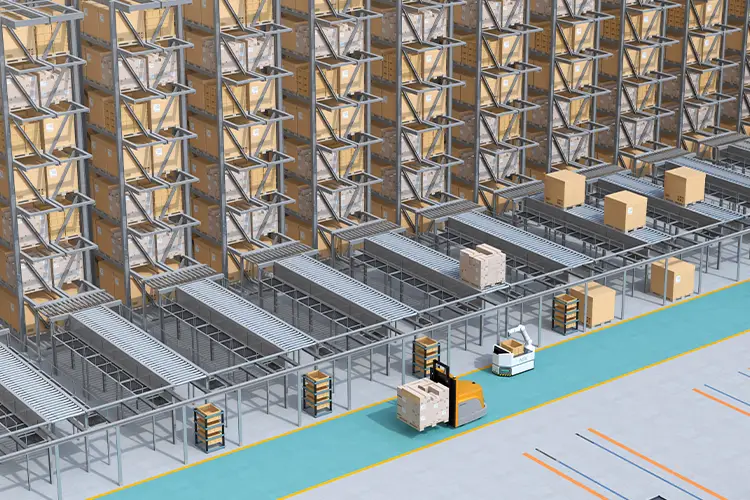
- Automated Stackers: An autonomous stacker AGV is designed to handle short- to mid-range transport and stacking of pallets. It completely eliminates the physical strain of the manual process. A worker can summon the robot to a location. The autonomous stacker will arrive, autonomously pick up the pallet, transport it to a designated rack location, and use its sensors to precisely lift and place the pallet on the shelf. The human worker exerts zero physical force and is removed from the risks of maneuvering a heavy, elevated load, preventing the back, shoulder, and neck injuries common with manual stackers.
- Autonomous Reach Forklift Trucks: The ergonomic benefit of an autonomous reach forklift is simple and profound: it removes the operator from the seat. This eliminates the operator's exposure to whole-body vibration and the damaging, neck-twisting postures required to drive in reverse. The robot handles the strain of the physical movement, while the former operator can be re-skilled to a less physically demanding role like managing the fleet from a computer terminal.
- Automated Tuggers: For milk runs, an automated tugger AGV can be programmed to follow a specific route, stopping at various workstations to have its carts loaded or unloaded. It can autonomously pull a train of several carts weighing thousands of pounds, completely removing the immense physical strain from the human worker. This becomes even more valuable when autonomous tuggers have auto-hitch and unhitch capabilities.
This approach allows for the creation of a true "cobot" environment, where robots handle the physically strenuous transport and humans handle the complex, value-added tasks.
A Healthier Workforce is a More Productive Workforce
Focusing on employee safety requires looking beyond just preventing major accidents. It demands a strategy to eliminate the daily, chronic physical stresses that lead to the most common injuries. A comprehensive AGV automation strategy does exactly that. By taking over the physically demanding tasks of pulling, pushing, lifting, and driving, AGVs are a powerful tool for reducing the costly ergonomic injuries that affect the majority of the warehouse workforce.