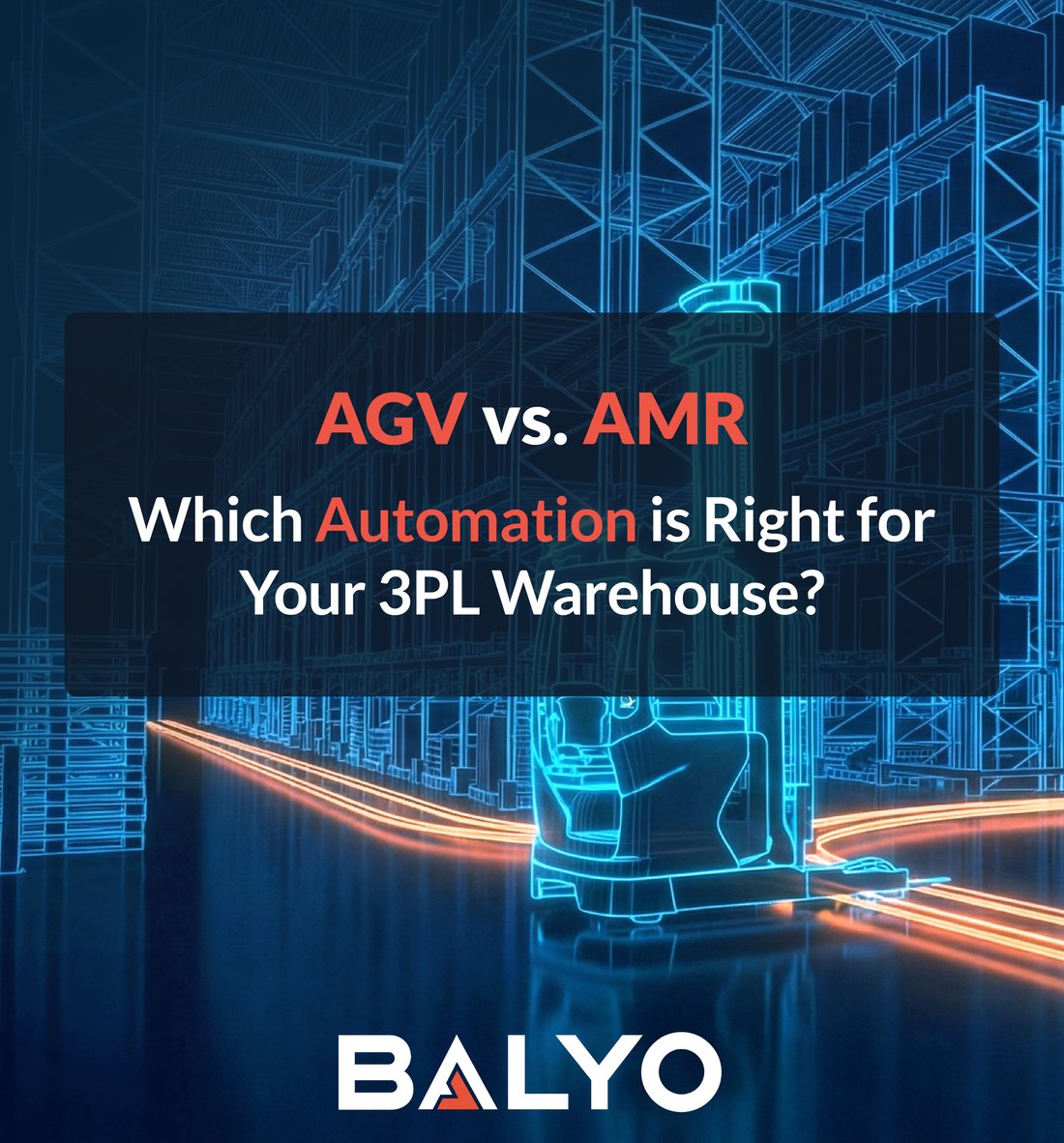
The first two acronyms you'll encounter when talking about pallet automation are AGV and AMR. While they might seem similar, understanding their fundamental differences is critical to choosing the right solution, one that solves the right problems for your 3PL logistics operation.
Making the wrong choice can mean investing in technology that doesn't fit your core business of pallet handling. Making the right choice, however, can unlock unprecedented efficiency and scalability in the areas that matter most.
This guide will break down the key differences to help you decide which technology is the right fit for your facility. For a higher-level view of how these technologies solve the labor crisis, see our complete guide: The 3PL's Guide to a Resilient Workforce.
AGVs: The Powerhouse for Floor to High-Bay Pallet Movement
Forget the old images of robots following magnetic tape on the floor. The modern AGV robot has evolved. Think of it less like a simple cart and more like an automated highway system for your warehouse—powerful, predictable, and built for moving heavy loads on optimized, virtual routes.
- How it Works: Today’s advanced AGV systems, like those from BALYO, use LiDAR and natural feature navigation. Instead of requiring disruptive infrastructure like tape, wires, reflectors, or QR codes, the AGV maps your facility once to create defined, virtual paths. This setup is fast, easy, and can be modified in software anytime your operational needs change. The AGV then follows these optimized routes with high precision and predictability.
- Pros:
- Proven Reliability & Predictability: Because AGVs operate on pre-defined, optimized paths, their behavior is extremely predictable. This prevents chaotic traffic flow and ensures a consistent, measurable throughput you can build your operational plans around.
- Heavy Payload Specialist: AGVs are typically built on industrial chassis. They are designed from the ground up for the core task of 3PL logistics: moving heavy pallet loads reliably all day, every day.
- High-Density and High-Lift: This is a critical advantage. AGVs, such as Very Narrow Aisle (VNA) AGVs or Reach Truck AGVs, are often the only automated solution capable of navigating the tight spaces required for high-density racking, allowing you to maximize your storage footprint.
- Fast Scalability: Many AGVs are custom-built, which means that years pass before you go from purchase order to full production. AGVs from companies like BALYO are built on a standard OEM forklift, with the robotic parts being quickly integrated over a couple of weeks.
- Best for: The core revenue-driving activities of a 3PL: pallet receiving, put-away into racking (including high-density), replenishment, and dock-to-dock transport.

AMR: Small Task Specialists
An AMR robot is an intelligent piece of technology, but its intelligence is typically applied to a different set of problems than heavy pallet handling. Think of it as a fleet of personal assistants, zipping around to handle small, individual items.
- How it Works: AMRs use onboard intelligence to navigate freely, often maneuvering around obstacles. While this sounds appealing, this constant recalculation can lead to less predictable travel times and traffic patterns in busy facilities compared to an AGV's optimized routes.
- Application Focus & Limitations:
- Picking & Sortation: The most common use for an AMR robot is in e-commerce fulfillment for piece-picking. Small, flat-top robots travel to shelves and bring them to a picker, or they carry individual totes and packages from one station to another.
- Not Designed for Heavy Lifting: The vast majority of AMRs are simply not built to handle the weight and size of a fully loaded pallet. Their form factor is wrong for the primary task of most 3PLs.
- Doesn't Solve the Storage Challenge: Because AMRs are designed for floor-level work, they cannot help you solve storage challenges off the floor. They cannot interact with or place pallets into higher-level racking, a key requirement for most warehousing operations.
- Best for: Piece-picking and sortation activities in an e-commerce setting; moving lightweight totes, bins, and individual packages.
The Clear Choice for 3PLs: The Autonomous Forklift AGV
For a 3PL whose business is built on pallet movement, the autonomous forklift—engineered as a modern AGV—is the superior strategic choice. It is the pinnacle of this technology, combining the fast, LiDAR-based setup with the operational predictability and industrial strength required for warehouse environments.
This technology provides the muscle needed for scaling for growth, allowing you to add capacity without adding headcount. Furthermore, its operational reliability is the key to creating the stable, predictable performance needed to achieve the end of labor volatility and guarantee you can meet your client SLAs.
Automate Your Core Business First
The "AGV vs. AMR" debate is about choosing the right tool for your most critical job. While AMRs are valuable for the specialized task of piece-picking, they don't address the fundamental challenge of most 3PLs: the efficient, reliable movement and storage of heavy pallets. For core 3PL logistics, the modern, LiDAR-guided AGV robot, especially in an autonomous forklift form factor, is the clear strategic choice to drive efficiency, reliability, and profitability.